A Guide to Roses in Art Throughout History
Roses have long symbolised love, beauty, and passion. Their striking appearance and evocative fragrance have inspired artists across various periods and styles. This guide will explore the representation of roses in art, tracing their significance and evolving symbolism from antiquity to modern times.
Ancient Civilisations
Roses were revered in ancient civilisations, particularly in Greek and Roman art. They often appeared in frescoes and mosaics, symbolising love and beauty. The Greeks dedicated the rose to Aphrodite, the goddess of love, while the Romans associated it with Venus. Such associations led to the rose being a prominent motif in pottery, sculptures, and coinage.
The Middle Ages
During the Middle Ages, the rose took on more complex meanings, often intertwined with Christian symbolism. It represented the Virgin Mary, becoming a symbol of purity and divine love. This duality is evident in stained glass windows and illuminated manuscripts from the period, where roses often appear alongside other religious iconography.
The Renaissance
The Renaissance marked a renewed interest in classical themes and a deeper exploration of nature. Artists like Sandro Botticelli incorporated roses into works such as "Primavera," where they symbolised love and the fleeting beauty of life. The rose's intricate details and vibrant colours offered artists an opportunity to experiment with realism, leading to more naturalistic representations.
The Baroque Period
In the Baroque period, roses gained prominence in still life paintings. Artists such as Pierre-Auguste Renoir and Juan Sánchez Cotán depicted roses alongside other flowers, emphasising their beauty and evanescence. These works often conveyed a sense of opulence and excess, reflecting the cultural values of the time.
The 19th Century
The 19th century saw the rise of the Romantic movement, which celebrated the beauty of nature and human emotion. Artists like Édouard Manet and Vincent van Gogh used roses to evoke feelings of passion and tenderness. Van Gogh’s "Still Life: Vase with Twelve Sunflowers" also included roses to symbolise the impermanence of life.
Modern and Contemporary Art
In modern and contemporary art, the rose continues to serve as a powerful symbol. It appears in the works of artists like Andy Warhol, who transformed the rose into a graphic motif, reflecting consumer culture and the commodification of beauty. Meanwhile, contemporary artists often utilise the rose to comment on themes such as gender, sexuality, and identity.
Artistic flowers
The rose has evolved through history, from a symbol of love and beauty in antiquity to a complex motif representing various themes in modern art. Its enduring presence across different art movements illustrates not only its aesthetic appeal but also its ability to convey deep human emotions and societal commentary. Understanding the role of roses in art enriches our appreciation of their beauty and significance throughout the ages.
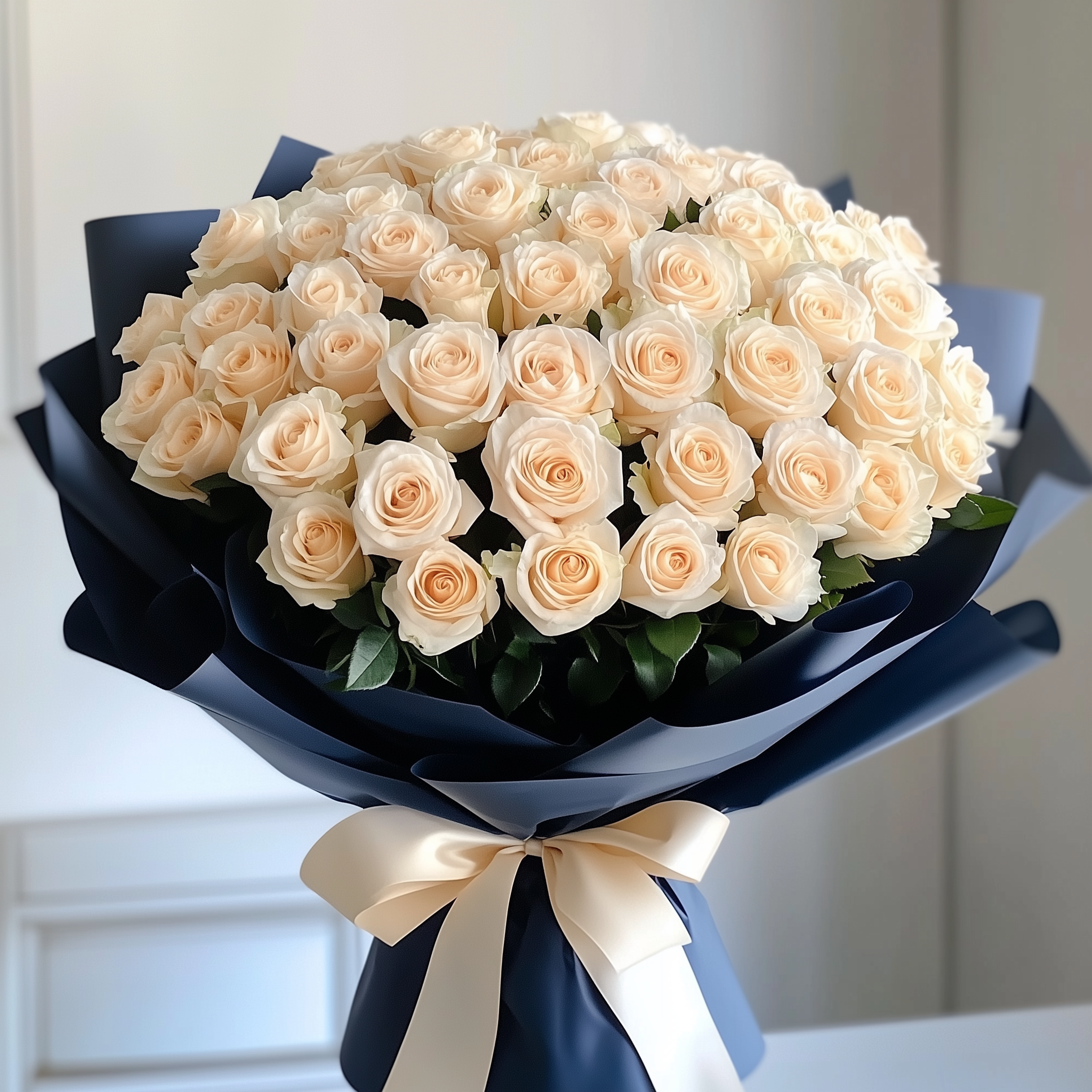
Our stunning champagne rose bouquet is the epitome of elegance and grace. Handcrafted with care, this enchanting arrangement features radiant peach roses that symbolize gratitude, appreciation, and sincere admiration. Each delicate bloom gently unfurls its petals, exuding captivating soft, blush tones, perfect for expressing feelings of joy, friendship, and deep affection.
In the photograph is the 99 rose bouquet.
Please note that flower colour may differ according to seasonality.
我們令人驚嘆的香檳瑰花束是優雅和優雅的縮影。這款迷人的擺飾經過精心手工製作,以光芒四射的桃玫瑰為特色,象徵著感激、欣賞和真誠的欽佩。每朵精緻的花朵都輕輕地展開花瓣,散發著迷人的柔和的紅色色調,非常適合表達歡樂、友誼和深情的情感。
照片中是99朵玫瑰花束。
花色可能會因季節而異。