Flowers as a symbol of love: A historical perspective
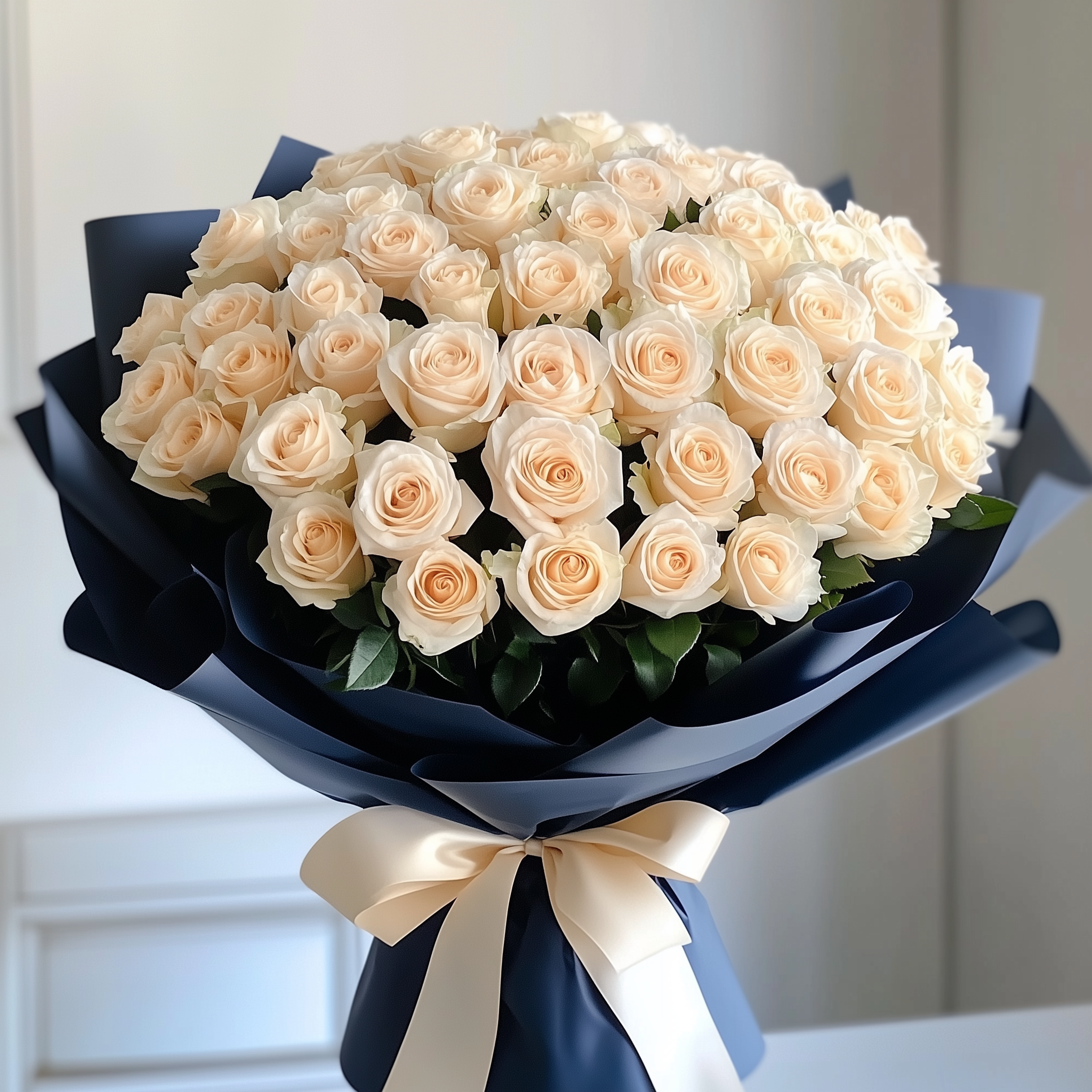
Our stunning champagne rose bouquet is the epitome of elegance and grace. Handcrafted with care, this enchanting arrangement features radiant peach roses that symbolize gratitude, appreciation, and sincere admiration. Each delicate bloom gently unfurls its petals, exuding captivating soft, blush tones, perfect for expressing feelings of joy, friendship, and deep affection.
In the photograph is the 99 rose bouquet.
Please note that flower colour may differ according to seasonality.
我們令人驚嘆的香檳瑰花束是優雅和優雅的縮影。這款迷人的擺飾經過精心手工製作,以光芒四射的桃玫瑰為特色,象徵著感激、欣賞和真誠的欽佩。每朵精緻的花朵都輕輕地展開花瓣,散發著迷人的柔和的紅色色調,非常適合表達歡樂、友誼和深情的情感。
照片中是99朵玫瑰花束。
花色可能會因季節而異。
Flowers have long been associated with love, with their symbolism evolving through various cultures and historical contexts over the centuries. This connection began in ancient civilisations, where flowers were used not only for their beauty but also for their powerful meanings.
In ancient Egypt, the lily symbolised purity and was often linked to the goddess Isis, who represented motherhood and fertility. The heart-shaped leaves of the water lily also came to represent love and longing in the mythologies of the region. Similarly, in Greece, the rose was dedicated to Aphrodite, the goddess of love, and by the time of the Romans, it became a central symbol in romantic literature and art, particularly red roses which signified passionate love.
During the Middle Ages, the tradition of gifting flowers blossomed, particularly in Europe. The introduction of the concept of "floriography," or the language of flowers, allowed individuals to convey feelings that words could not express. A specific arrangement or type of flower could hold a deeply personal message. The red rose continued to represent romantic love, while the white rose embodied innocence and purity.
In the Victorian era, the symbolism of flowers became more intricate. The bluebell, for instance, stood for humility and everlasting love, while violets indicated faithfulness. This period saw love letters accompanied by carefully selected blooms, enhancing their emotional weight. One notable example is the daisy, which symbolised innocence but also secret love, showcasing the complexities of romantic relationships.
As cultures intertwined, flowers like the carnation gained ground in representing deep love and fascination. Among the Japanese, cherry blossoms were celebrated as symbols of the transient nature of life and love, intertwining beauty with the inevitability of change and loss.
Through the 20th century and into modern times, the role of flowers in love language continued to thrive. Flowers such as tulips became associated with perfect love, whilst lilies maintained their place as symbols of purity and commitment, often appearing in bridal bouquets. The enduring popularity of flowers like peonies and orchids reflects their luxurious connotations and the ongoing significance of floral gifts in romantic gestures.
Flowers have transcended their botanical origins to embody the spectrum of love. Each species, with its unique symbolism, contributes to a universal language of affection that continues to enrich human relationships across cultures and generations.